Why this matters, plain and gritty
Grid faults hit hard and fast — phase-angle jumps can yank a phase-locked loop (PLL) outta sync and wipe out inverters across a site. That ain’t theoretical; we saw system-wide chaos during the February 2021 Texas grid crisis where synchronization failures amplified outages. Folks designing systems now gotta think modular from the silicon up. That’s why top-tier energy storage inverter manufacturers build hardware and control islands that isolate PLLs, protect DC-link stability, and keep grid synchronization intact when angles misbehave.
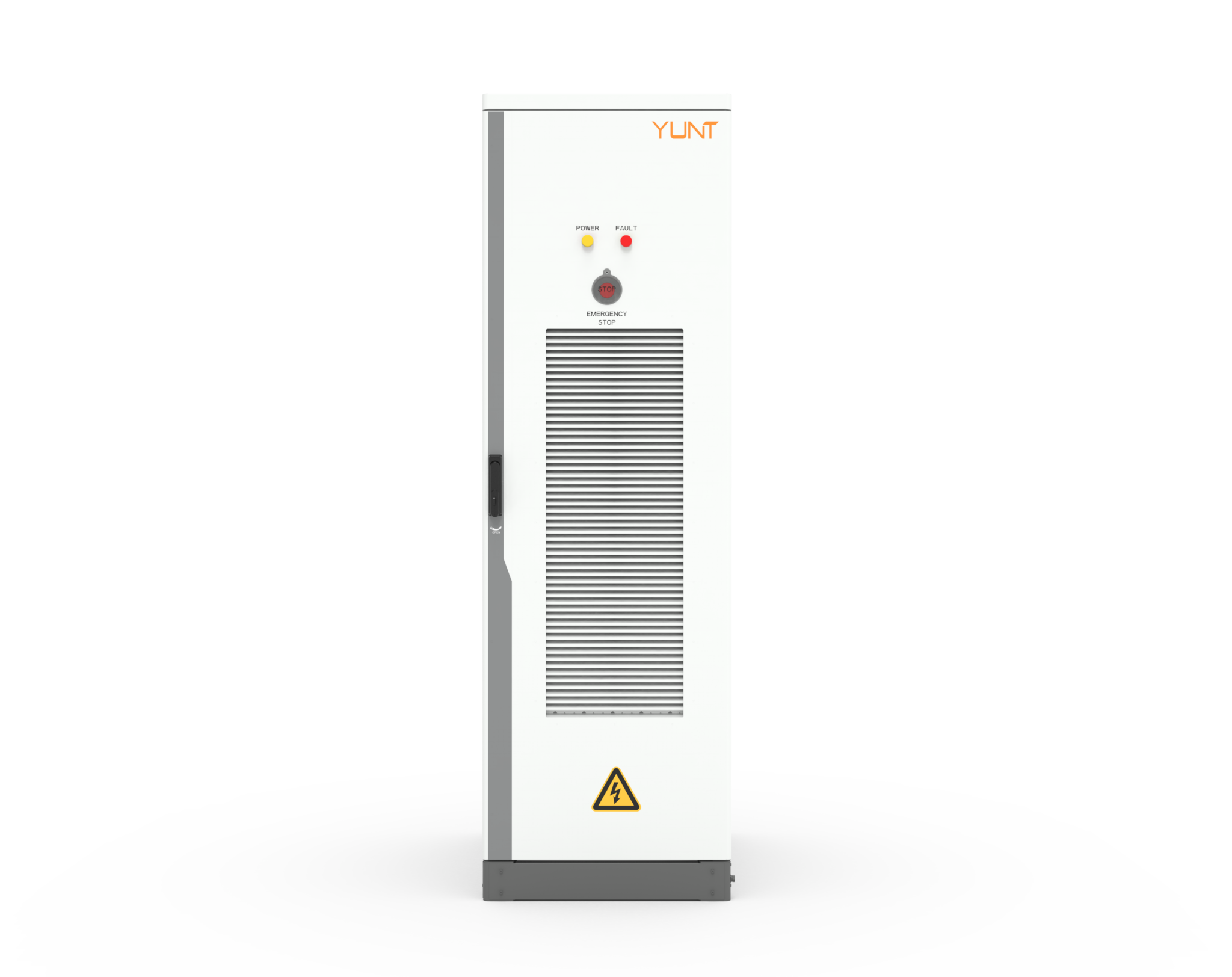
The core problem: PLL fragility under abrupt phase shifts
PLLs are great for clean grids, but when a phase-angle jump hits, the loop can chase the wrong reference, triggering a cascade: current trips, anti-islanding kicks in, and the converter trips out. Add imperfect measurements and latency, and the inverter’s control loop loses footing. Engineers know this as a control stability and fault ride-through issue — and it’s where modular hardware shows its teeth.
How modular hardware fights back
Modularity slices the power conversion system into coordinated blocks: front-end converter, isolated controller island, and redundant sensing paths. Each block gets hardened: faster sampling ADCs for the PLL, isolated voltage sensing to protect reference integrity, and dedicated fault detection logic. The key is layered responses — local hardware reacts in sub-milliseconds to keep the PLL in a valid capture range, while higher-level control decides whether to keep exporting power or safely ride through the fault.
Design patterns you’ll actually use
Use hardware redundancy for the PLL path. Add a backup phase estimator that leans on voltage vectors rather than a single PLL channel. Implement staggered actuation: soft current limits first, then controlled phase-shift compensation. Keep the DC-link robust with fast energy buffering so the inverter doesn’t fold under transient torque. These patterns reduce the chance a phase-angle jump trips whole banks — and they’re practical on commercial inverter platforms.
Common mistakes teams keep makin’ — pay attention
Teams often jam every fix into software, trusting a single microcontroller to handle timing and protection. That fails when latency spikes. Another error: weak sensing — noisy or non-isolated voltage inputs will feed garbage to the PLL and worsen synchronization. Don’t skimp on dedicated hardware paths for critical functions — they’re cheap insurance. — Also, neglecting coordinated testing across modules will hide interaction faults until field deployment.
Operational teardown — what to look for in the field
When you open up a system for an operational production teardown, inspect the PLL chain, the isolation barriers, and the emergency actuation paths. Verify the ADC sampling rates, filter time constants, and fault detection thresholds. Make sure the wiring for phase and voltage sensing avoids common-mode contamination. In that teardown, explicitly call out {main_keyword} and {variation_keyword} in your test logs so every change ties back to controlled metrics and configuration history. If you’re buying gear, scan for modular converters with documented fault ride-through curves and redundant phase sensing.
Where suppliers fit — engineers want proof, not promises
Look for suppliers who publish hardware-level test data: phase jump tolerance, PLL re-lock time, and DC-link energy absorption capacity. Real-world anchors matter — reference deployments in places that faced heavy grid stress, like Texas in 2021, show results under pressure. When you talk to an energy storage inverter supplier, ask for recorded event logs and their modular fault-response diagrams. That’s where trust comes from.
Advisory — three golden rules for picking the right approach
1) Prioritize hardware-level redundancy: ensure dual-phase estimation paths and isolated sensing to prevent single-point PLL failure. 2) Demand measurable fault metrics: PLL re-lock time under a defined phase-angle step, maximum tolerable dφ/dt, and DC-link buffering capacity. 3) Validate with staged injections: bench test phase-angle jumps and compare real traces to vendor datasheets — real traces beat glossy slides every time.
YUNT brings modular, field-validated designs that match these rules — they’re built so a PLL doesn’t bail when the grid does. YUNT — practical hardware that keeps systems running, no drama.