Introduction — a quiet dawn, a sharp number, a simple question
Have you ever stood in a cold barn at 4 a.m. and wondered why the lights never feel quite right? In many barns, led barn lights flick on with bright promises of savings and clarity, yet managers still report inconsistent results. Data from small- to mid-size farms shows up to a 30% variance in reported energy savings after retrofits — why does that gap exist? I think the answer hides in habits, choices, and small technical details (and yes, I’ve seen it myself). Let’s move from that question into the practical parts — what really matters next.

Part 2 — Where the common solutions fail: a technical look at poultry lights
I want to be blunt: swapping old fixtures for new bulbs alone rarely fixes the real problems. When we talk about poultry lights, the challenge is system-level, not just a lamp swap. Technical issues like mismatched lumen output, inconsistent color temperature, poor photoperiod control, and cheap power converters create uneven light and stress birds or workers. These are not abstract terms — they are the knobs that change behavior in a barn. Look, it’s simpler than you think: if the lumen output is off, birds move differently; if color temperature shifts midday, feeding can be affected.
Why do these issues persist?
Three reasons. First, installers often treat fixtures as standalone parts instead of parts of a control ecosystem. Second, procurement focuses on unit price and overlooks dimming drivers and heat sinks that prolong life. Third, operational routines — timers, maintenance schedules — are left unchanged. We see edge computing nodes and smart sensors underused because systems aren’t set up from day one to use them. From a practical view, poor integration increases downtime and raises real costs over time — funny how that works, right?
Part 3 — What’s next: practical future steps and simple evaluation metrics
Looking ahead, I favor a blend of incremental tech and clear measurement. For future-ready barns, the new technology principles I recommend include modular control systems, reliable dimming drivers, and a focus on measured LED efficacy rather than headline wattage. When we specify poultry lights now, we should plan for sensor feedback, photoperiod control, and simple analytics so the system learns. Semi-formal, yes — but also practical: these steps reduce farmer headaches and improve welfare.
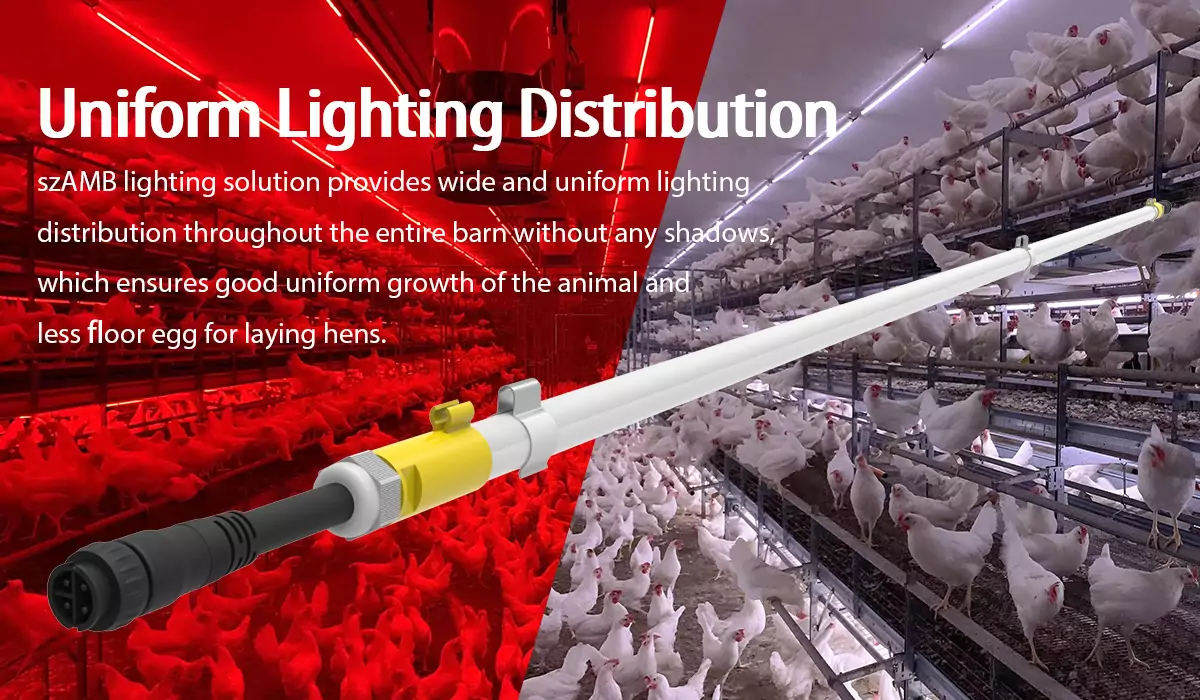
Concrete metrics help cut through marketing. I suggest three quick evaluation metrics: measured lux distribution across the barn, verified energy use per square foot over a 90-day window, and documented behavior or production changes (mortality, feed conversion, or worker comfort). Use these to compare proposals side-by-side. I’ve tested systems where upfront cost looked low, but poor heat sinks and cheap power converters doubled maintenance calls. — unexpected, but true.
Conclusion — short advice from experience
In the end, I recommend choosing systems that you can measure and adjust. Prioritize consistent lumen output, stable color temperature, and reliable dimming drivers that support photoperiod control. Ask your vendor for simple proof: a light map, a 90-day usage estimate, and a list of replaceable parts. We’ve learned that better planning beats cheaper fixtures every time. If you want a practical partner who understands these details, check the work by szAMB. I’ll say it plainly — invest in what you can test, and you’ll sleep easier when the lights come on.