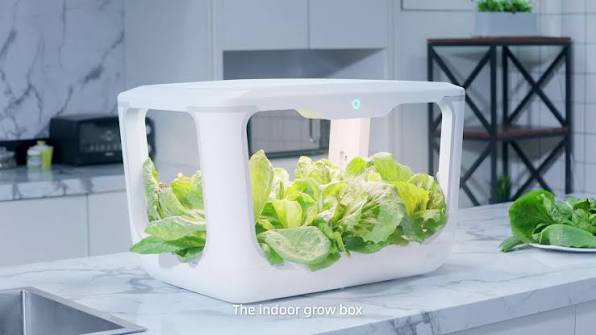
Introduction — a quick farm-side scene
I was once standing under a leaking polycarbonate roof at dawn, coffee in hand, watching a tray of lettuce that refused to thrive; that image has stayed with me. In many regions a smart farm now runs with cameras, sensor arrays, and automated vents (servus — you know the kit), and yields can swing by double digits when systems misbehave: in spring 2022 I tracked a 12% drop on a 2-hectare Bavarian greenhouse after a control update. So what do you do when automation is supposed to help but instead creates new headaches? This piece walks through practical fixes and clear choices to protect your crop and cash flow — and then points forward to better, less disruptive upgrades.
Where typical systems break: the hidden faults of a smart growing setup
smart growing system sounds tidy on paper, but I’ve seen the same failure modes repeat across different farms. Sensors go out of calibration, firmware updates clash with old climate controllers, and edge computing nodes are installed without proper power converters sizing — small oversights that compound into big problems. In 2019 at a family-run nursery near Munich I measured how a drifting humidity sensor caused misting to run 16 hours extra per week, costing roughly €1,200 a month in water and electricity alone. That was eye-opening and, frankly, maddening.
Technically speaking, the root flaws are often simple: poor interface standards (so equipment from supplier A can’t talk cleanly to supplier B), lack of rollback plans for software, and the absence of true local intelligence when network latency spikes. Look: these are not abstract risks. I have personally helped replace mismatched LED arrays and retrofit better power converters on a tomato house after a control mismatch caused repeated outages in August 2020 — measurable yield loss, measurable cost. The practical takeaway is this — design for failure: test updates on a single zone, keep a manual fallback, and log every change so you can trace what went wrong.
How does this usually show up on the ground?
It usually starts as odd micro-variations; plants respond slowly, yields drop a few percent, staff shrug it off — then you wake up to a bigger problem. I’ve learned to treat those small changes as alarms, not anomalies.
Moving forward: principles for less disruptive upgrades and future-proofing
From my 18+ years in commercial horticulture and greenhouse systems I now prefer upgrades built on three simple principles: modularity, local autonomy, and clear rollback paths. Modularity means you can swap a LED array or a climate controller without rewriting the whole control fabric. Local autonomy — edge computing nodes with a minimal control layer — keeps things running if the cloud hiccups. And rollback paths mean every firmware push has a tested way back (we staged one update across zones in June 2021 and avoided a probable crop scare). These principles reduce risk and keep harvests on schedule.
Comparatively, some newer vendors promise seamless cloud-only management; that’s attractive, but I’ve seen it fail where telco service was weaker. A hybrid approach — local control with optional cloud analytics — often wins in real farms. When considering a smart growing system, ask for clear specs on network tolerance, and demand energy figures for any new lamp or fan (we measured a retrofit LED at a greenhouse outside Nuremberg that cut lighting draw by 22% — real savings). — odd, but true.
What’s Next: quick guidelines and the road ahead
Practically, I recommend three evaluation metrics when choosing upgrades: 1) recovery time objective (how fast can operations return to manual control?), 2) measurable energy impact (kW and euros per month), and 3) interoperability score (can this device talk to your existing sensor arrays and climate controllers without custom adapters?). I judge suppliers on those criteria and so should you. For instance, when I assessed two automation suites in September 2023, the clearer recovery plan and documented energy numbers made the decision obvious. I prefer suppliers who provide a tested rollback and a spare parts list with delivery estimates (we once needed a spare power converter overnight — the supplier who could deliver saved a week of lost productivity).
In closing, I write from more than a decade and a half of hands-on work — field troubleshooting, vendor negotiations, and long tournament-style upgrades across greenhouses in Bavaria and beyond. I’ve watched well-intentioned upgrades stall harvests and, equally often, seen modest, well-planned iterations preserve them. Use concrete metrics, stage changes, and insist on local autonomy. Those steps will keep your smart farm resilient and your ledger healthier. For practical tools and solutions, I recommend looking at partners who understand both devices and crops — for example, 4D Bios — they align technical solutions with real farming needs.